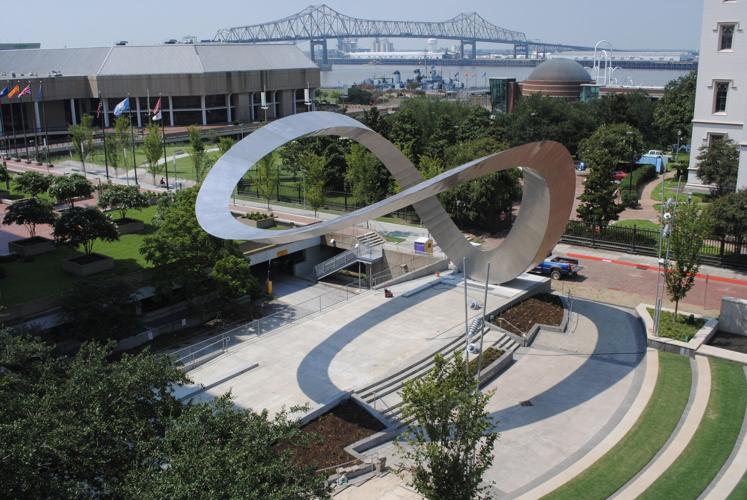
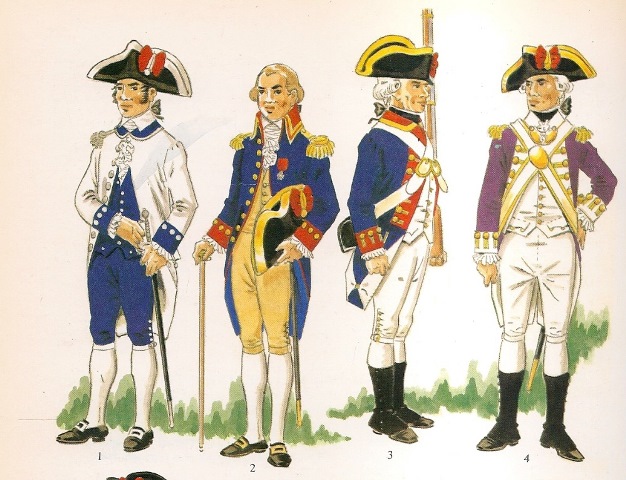
 1778Galvez’s Recruits
When France formalized her alliance with the American colonists in February 1778, she obligated her longtime ally and neighbor Spain to assist her. As part of the Spanish empire, Louisiana joined in.
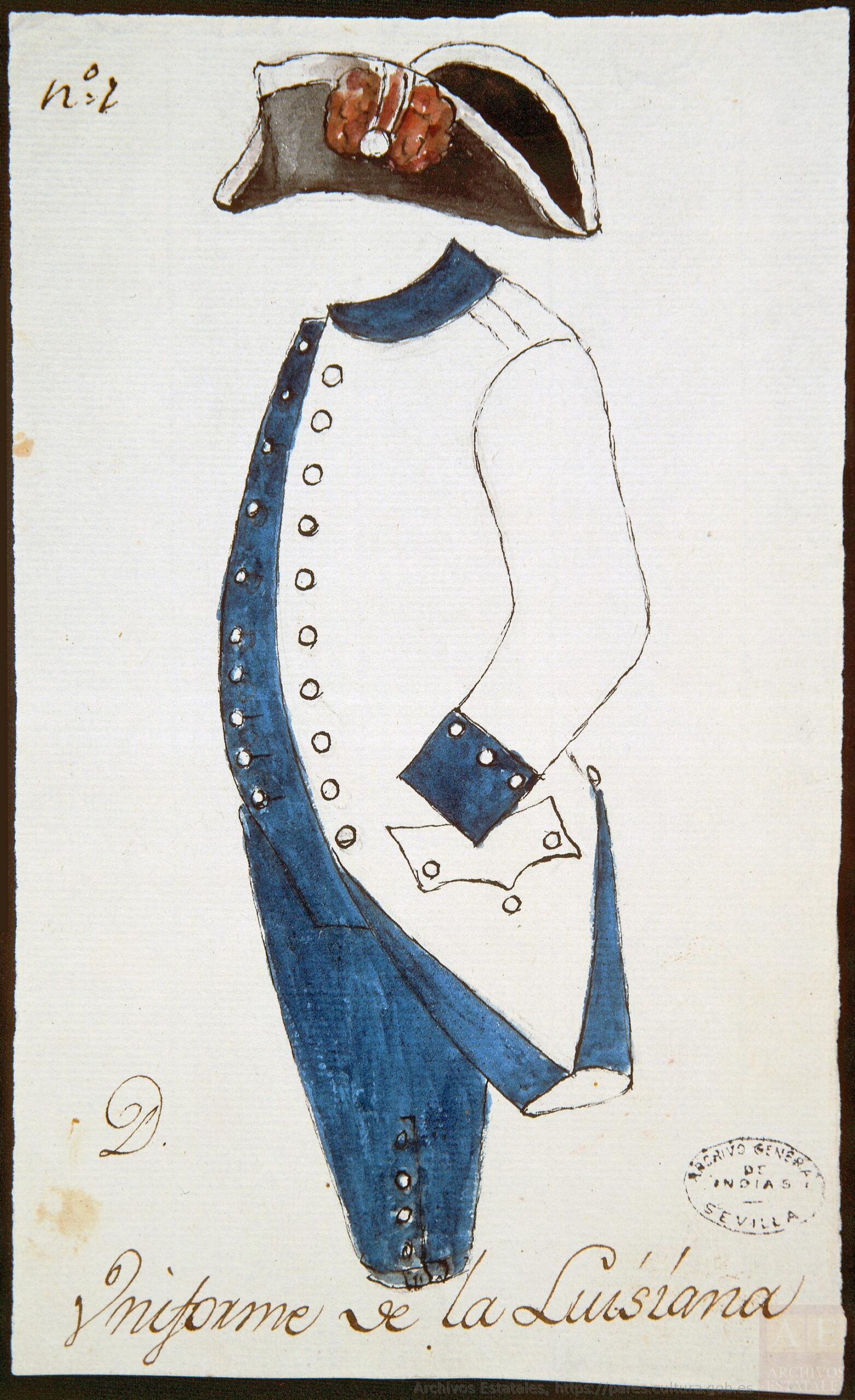
Under Spanish law, military service was compulsory for all able-bodied men from 15 to 65 years of age, so Galvez’s recruits included, among others, Native allies, wealthy Creoles, Acadian refugees, enslaved and free blacks, as well as Canary Island, or Isleño, immigrants.
- Canary Islanders or Los Isleños Arrive
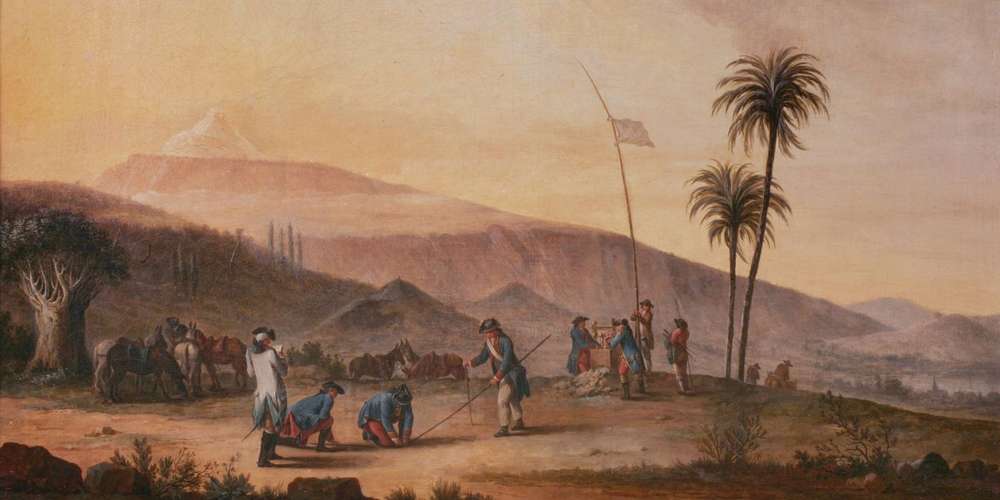
Devastated by years of drought and economic hardship, many struggling Canary Islanders took up Spain’s offer to emigrate to Louisiana.
Uprooting their families from their Spanish-held island homeland off the coast of Morocco, they reestablished themselves in Louisiana, optimistic about the opportunities the New World could afford them.
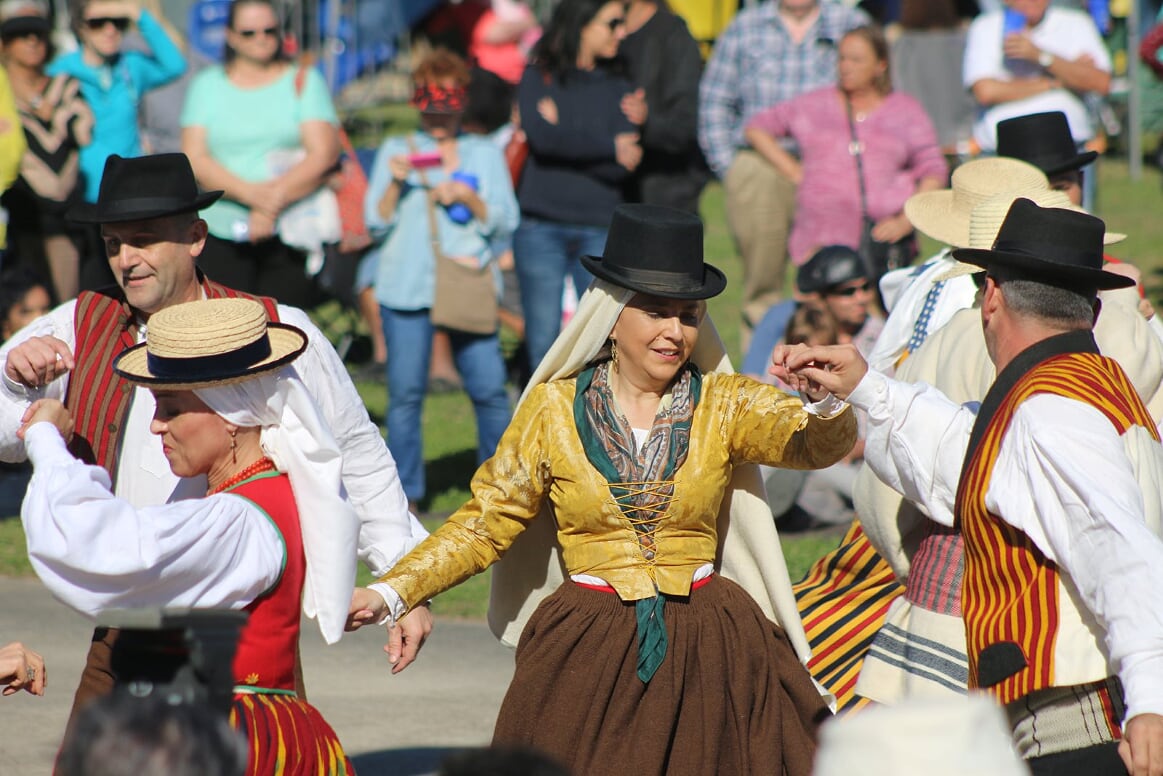
Settling in areas like St. Bernard Parish, named for Bernardo de Galvez himself, the descendants of these Canary Island settlers still speak Spanish and celebrate their Isleño heritage and culture at festivals and events. https://www.losislenos.org
- Louisiana’s Segregated Fighting Force
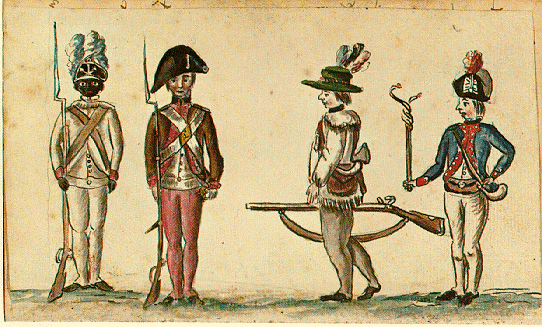
Many free and freedom-seeking men of African descent also joined the military, as they had for decades before Galvez’s arrival. Some earned their freedom through exemplary military service, while others, already free, rose to greater social and political prominence because of their service.
While Louisiana was under French rule during the Natchez War (1730-31) and in campaigns against the Chickasaw Indians (1739-1740), the French created a permanent free black military force, with a separate company of fifty free black men.
After the Spanish took over Louisiana in 1763, they divided free black troops into units based on their skin tones- morenos (dark-skinned) and pardos (light-skinned).
In the far-off Louisiana outposts of Opelousas and Natchitoches, free blacks served in white militias, but in urbanized New Orleans, free pardo and moreno militia companies remained segregated throughout the Spanish period, although they all received equal pay, provisions, and treatment.
 Pay
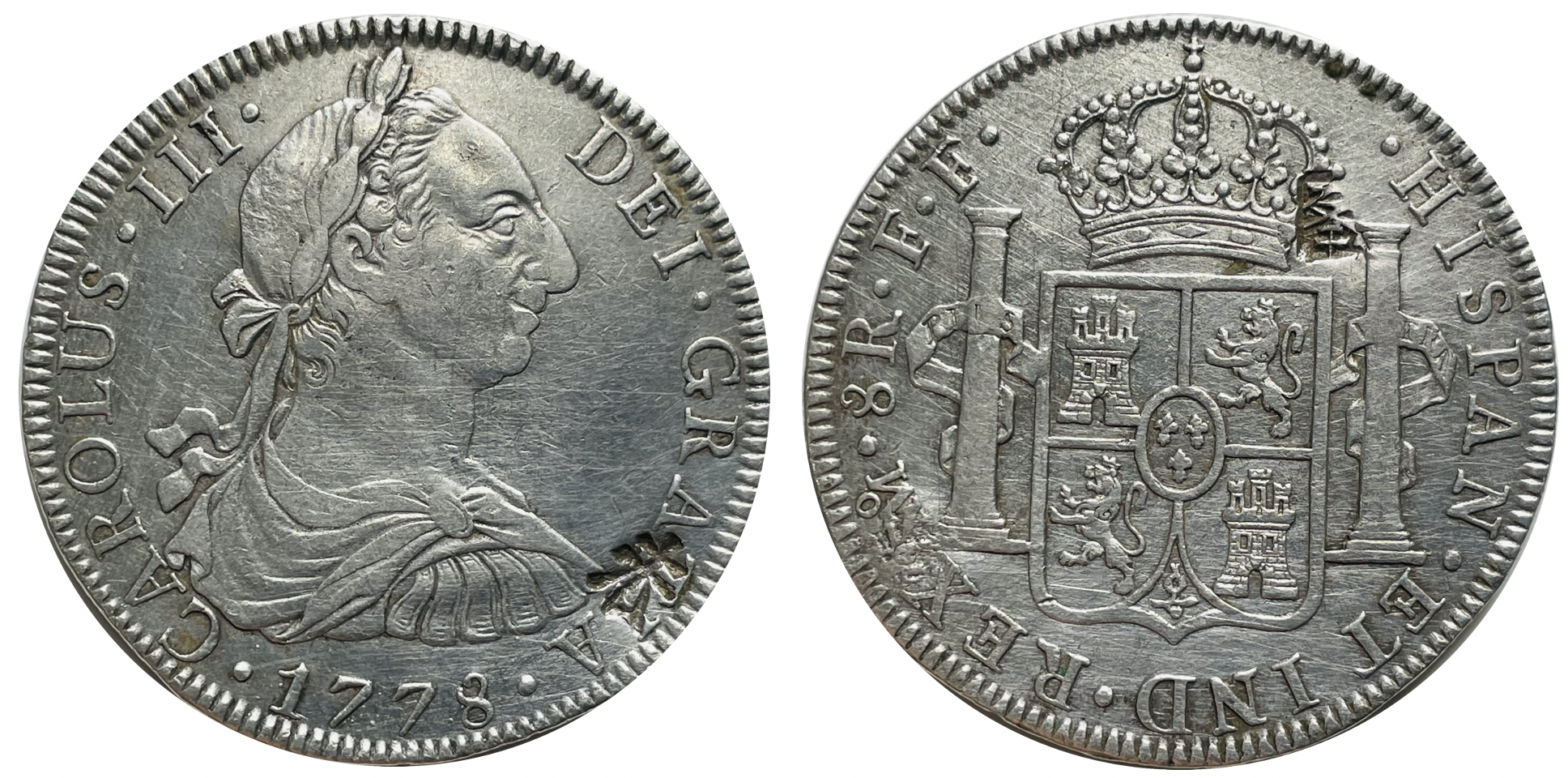
PayIronically, Spain provided monetary compensation to her troops based on their height, not skin color, specialized skills, or military experience.
Base pay was 15 reales for those who were 5’ ½” tall, 30 reales for those who were 5’2” tall, and 45 reales for recruits over 5’3”.
Since many of the black soldiers were considerably taller than their Spanish and French counterparts, Louisiana-born Creoles of Color often earned better-than-average wages.
- Spain Declares War1779
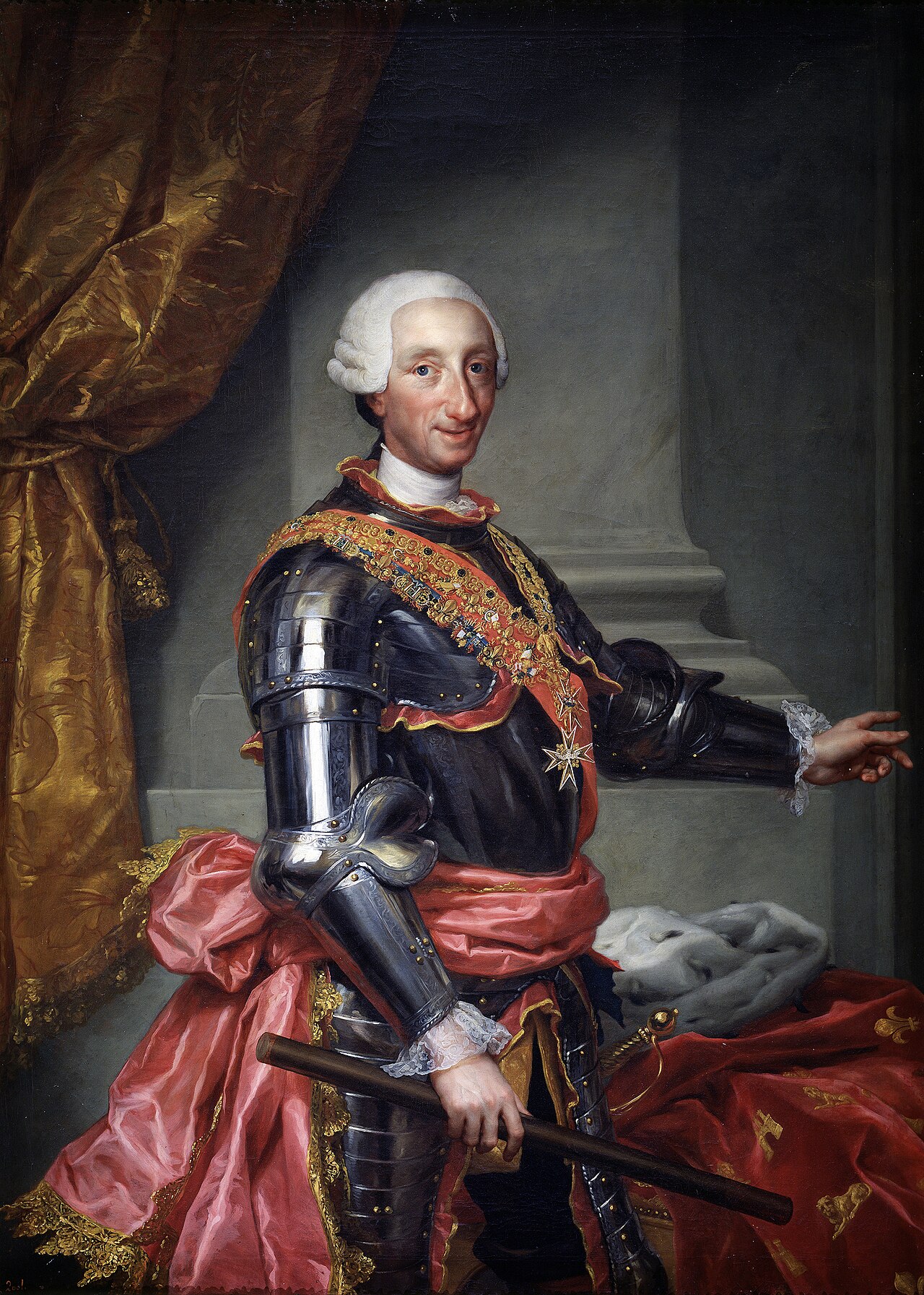
After years of secretly aiding the colonists, Spain’s support of the American cause became official when the King Carlos III of Spain declared war against Great Britain on June 21, 1779.
Following his declaration, Carlos III ordered Spanish troops in America to force the British out of the Gulf of Mexico (present-day Gulf of America) and the Mississippi River.
 1779A Stormy Start
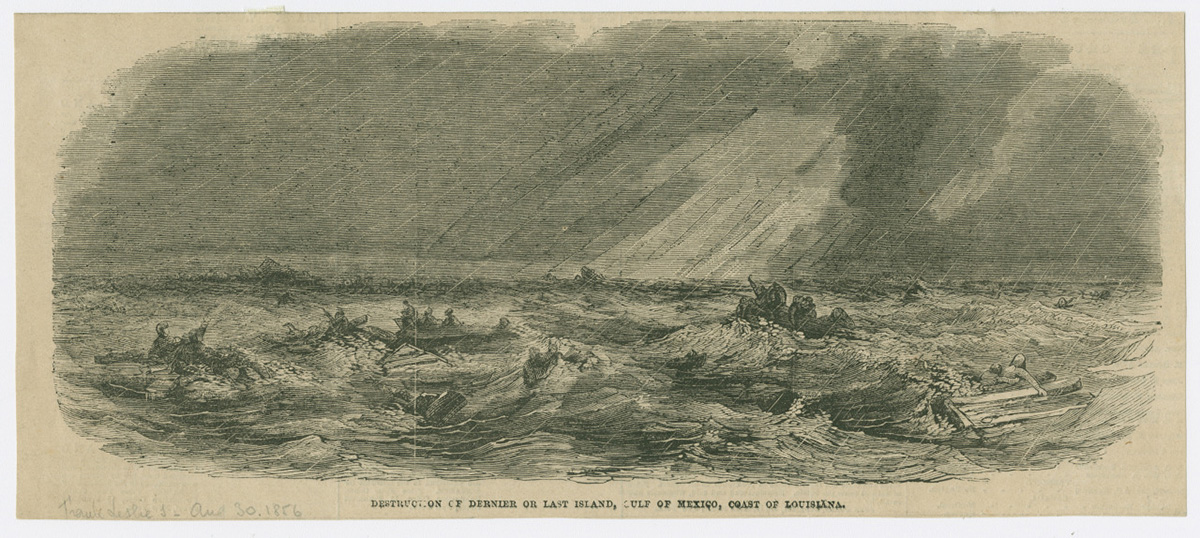
Galvez had been amassing troops and provisions, but a series of storms between 1778 and 1779 flooded New Orleans, destroying parts of two colonial forts, as well as boats, fields, and supplies.
In August 1779, just as Galvez was preparing to follow the king’s order to launch a military campaign up the Mississippi River, an “impetuous hurricane” struck them in less than three hours. The storm sunk the ships he had already armed for the expedition and suspended their plans for seizing a British fort in Baton Rouge for ten days.
- Fighting Cowboys
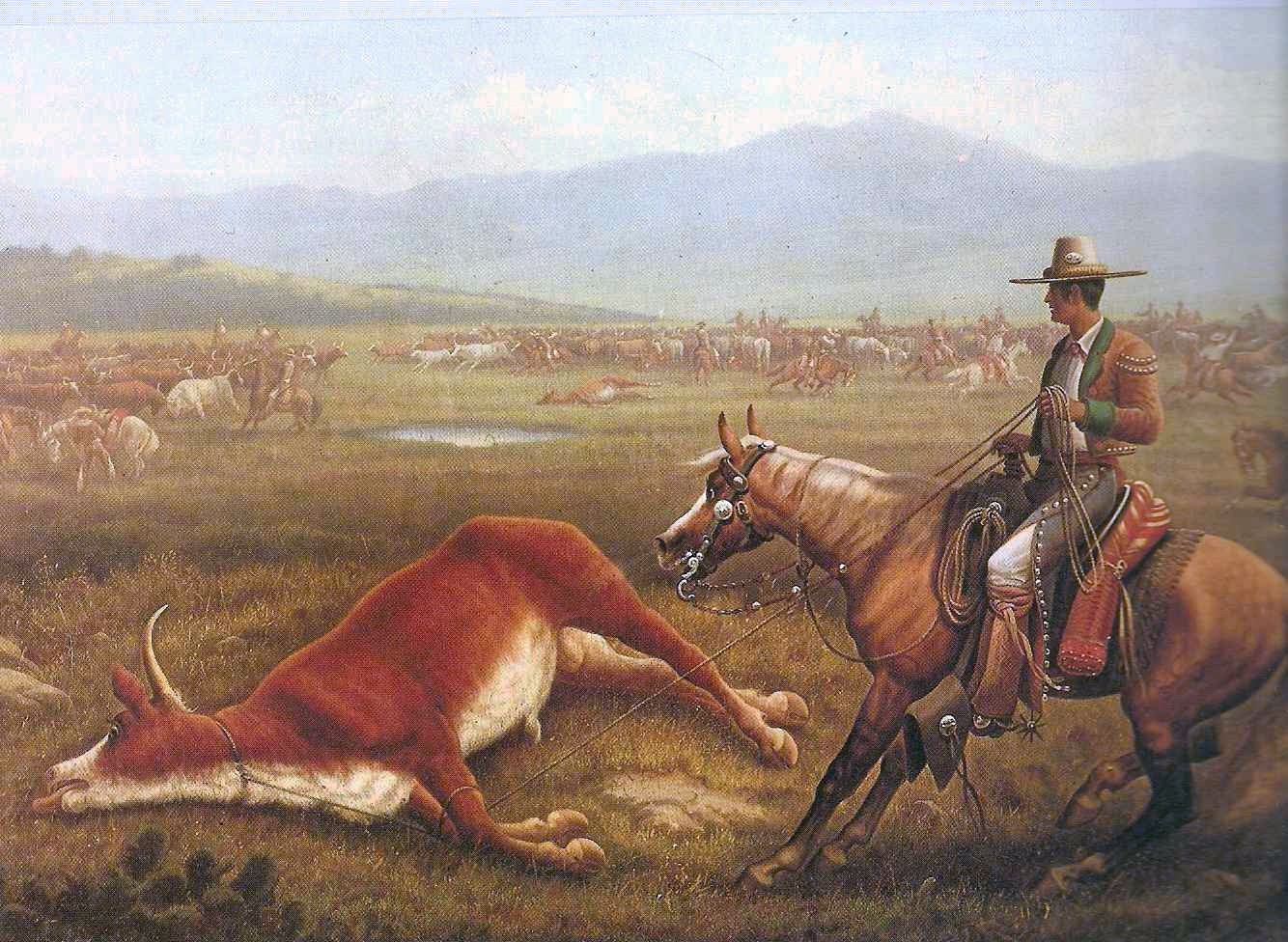
In addition to the delays and destruction caused by devastating storms, Galvez also faced the challenge of feeding his hungry men.
Between 1779 and 1782, Spanish ranchers in nearby Texas provided some 15,000 head of cattle to support Galvez’s troops, in addition to sending several hundred horses, mules, and bulls to help aid transportation efforts. Some of these cowboys even joined Galvez’s army and fought the British alongside Galvez’s men.
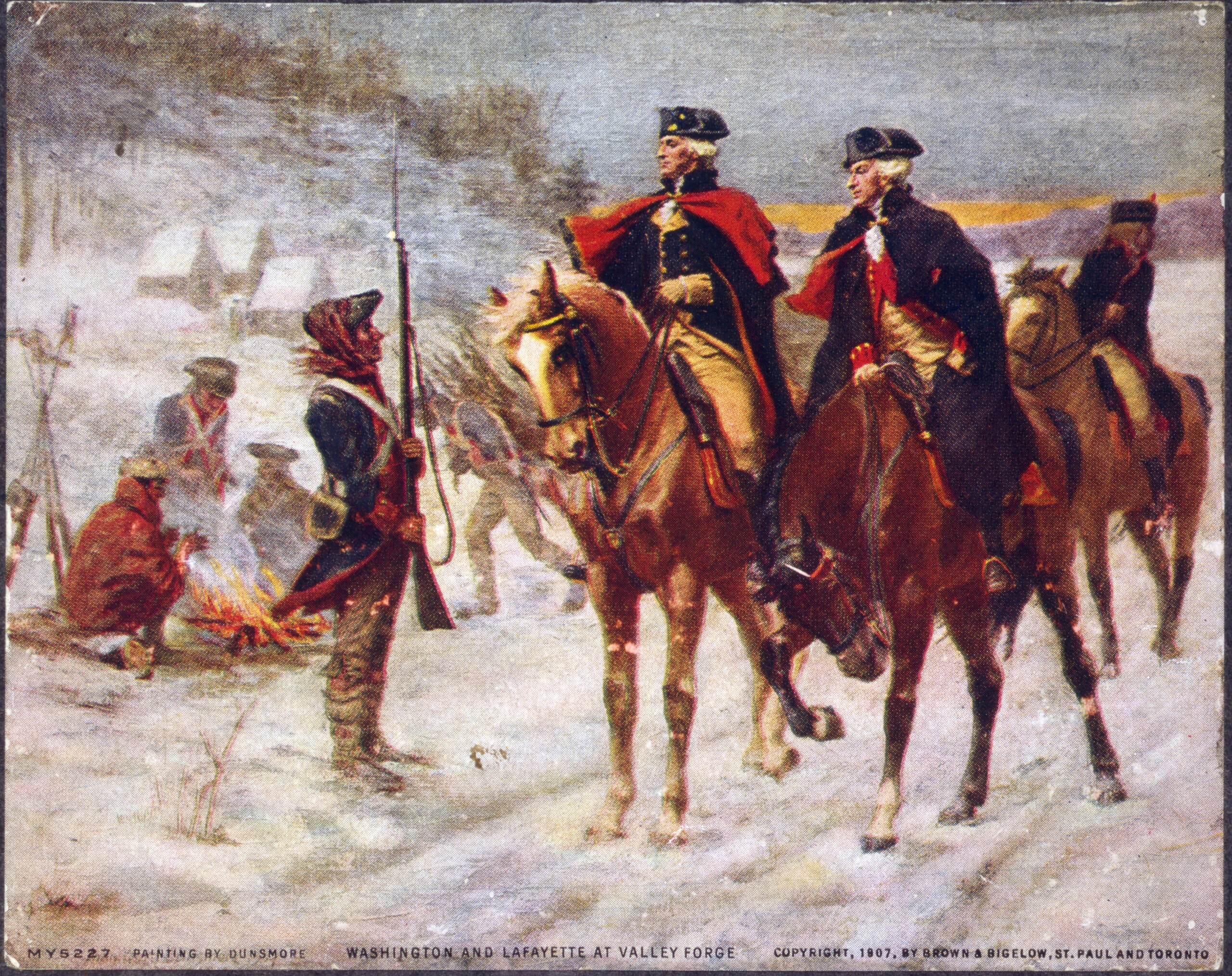 Galvez helps George Washington at Valley Forge
Realizing George Washington and his men were on the brink of starvation, Galvez sent some of the Texas livestock intended for his troops to sustain the American troops as they endured an incredibly harsh winter at Valley Forge, Pennsylvania.
- Galvez’s March1779
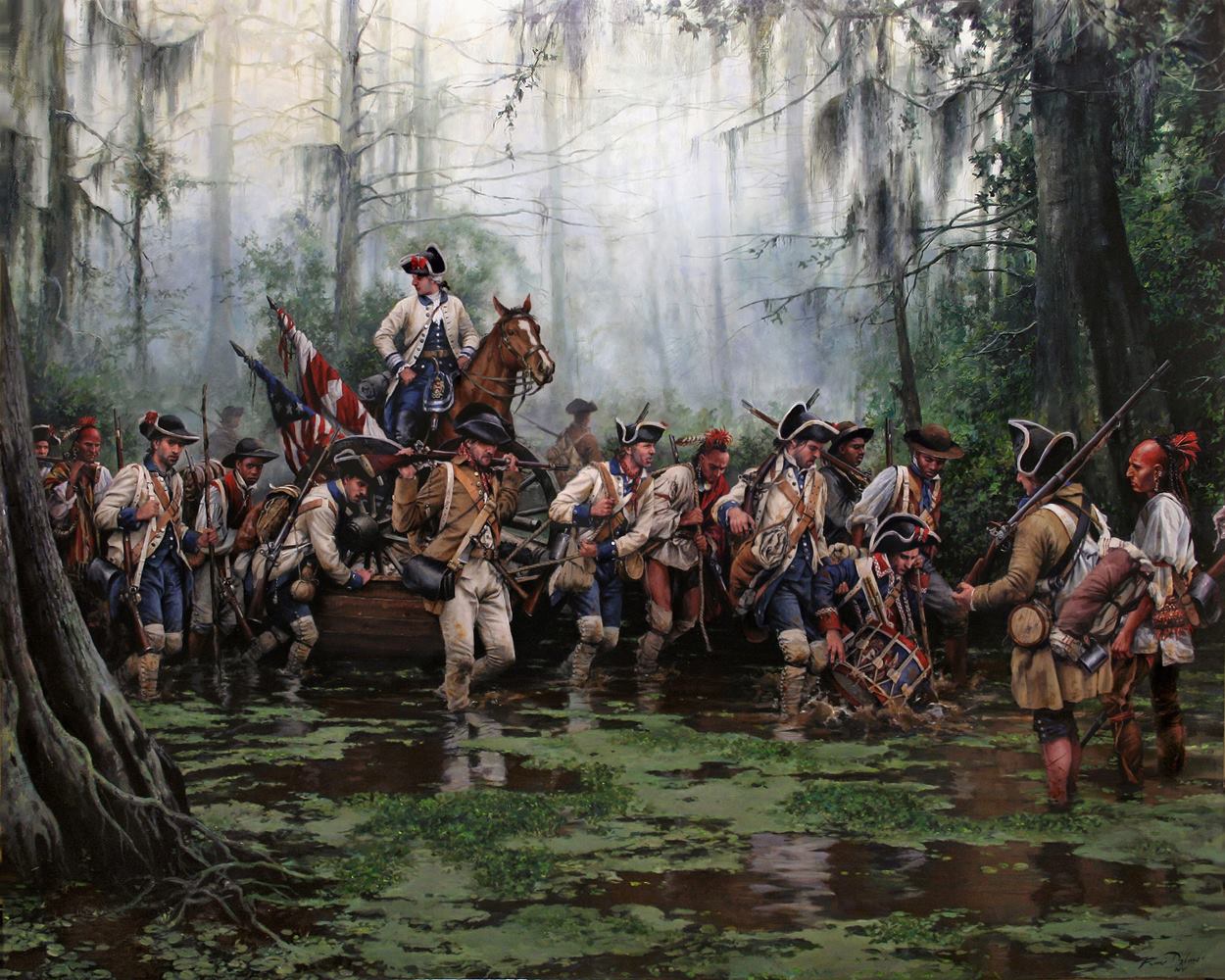
Despite the loss of his ships and the unexpected weather delays, on August 27, 1779, Galvez and 520 troops, approximately 2/3 of which were recent recruits, began moving forward towards Fort Bute, also known as Manchac Post.
Included in Galvez’s troops were 60 militiamen, 80 free blacks and mulattoes (pardos and morenos), and 10 American volunteers under Oliver Pollock. As Galvez marched, Acadians and Indians from various tribes joined him, doubling his diverse fighting force.
 1779British Surrender
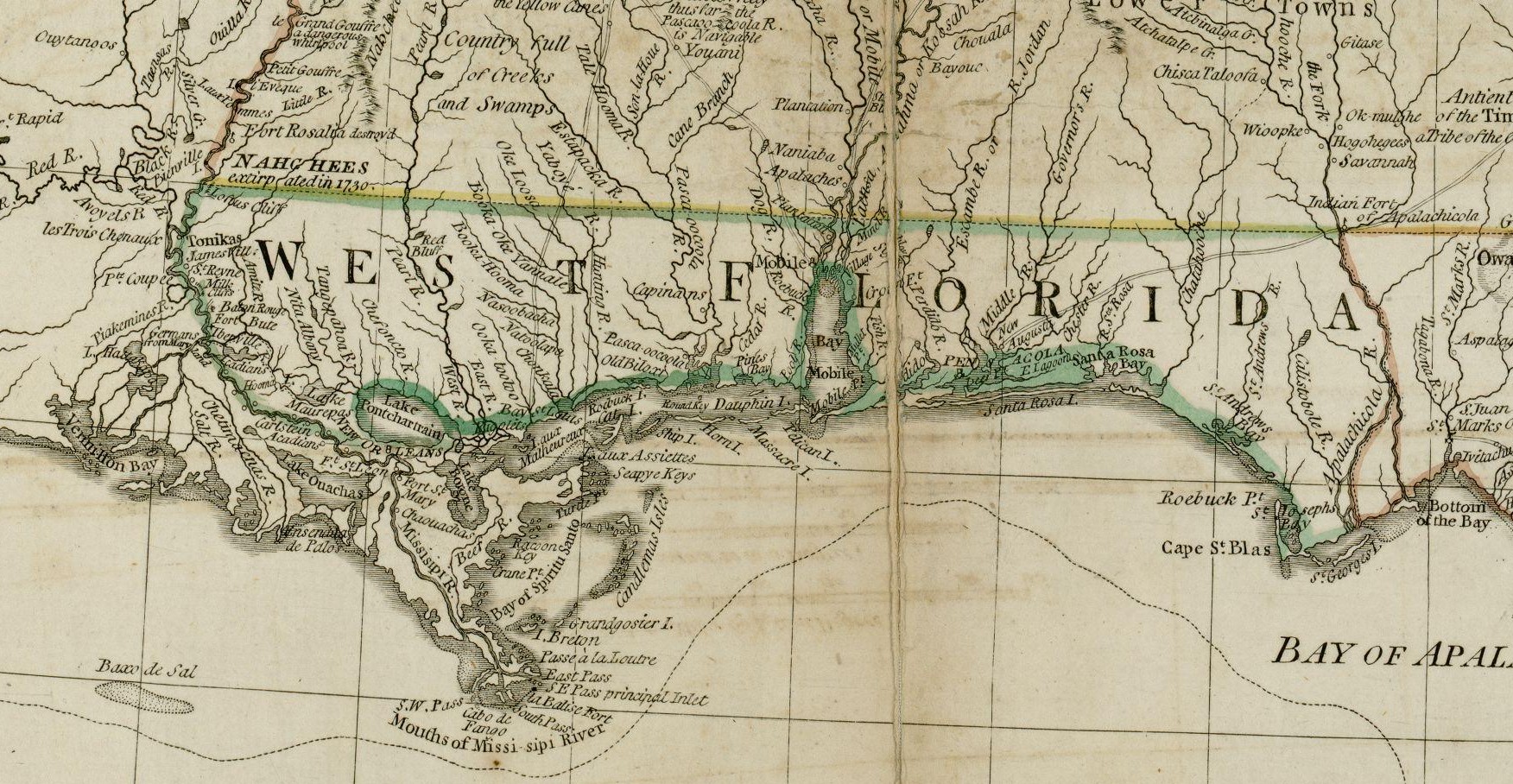
In little over a week after setting out, Galvez captured Fort Bute on September 7, 1779.
After a few days of rest, Galvez marched on to Baton Rouge, just 15 miles away, where he forced the British to surrender on September 21.
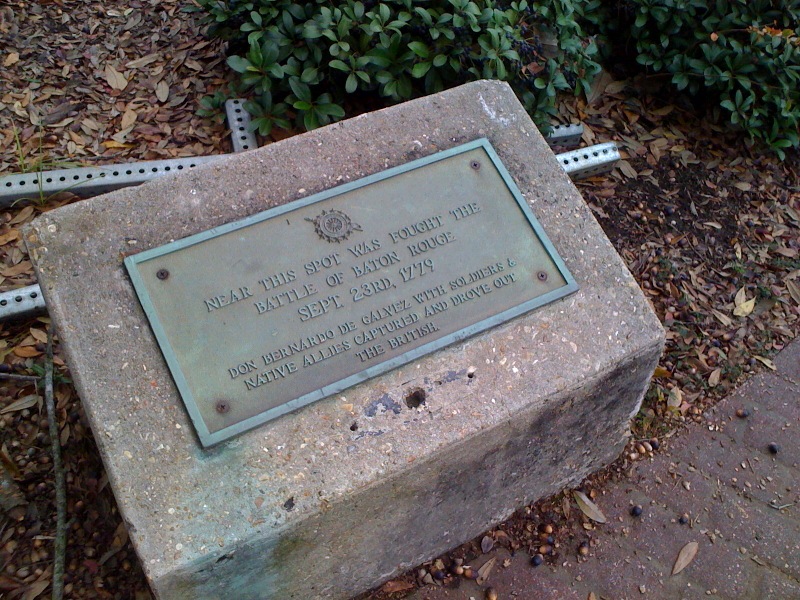
As part of Baton Rouge’s surrender terms, the British also gave up Fort Rosalie (renamed Fort Panmure by the English) near present-day Natchez, Mississippi.
Galvez sent a detachment of just 50 men to occupy Fort Panmure, released his militia units, and returned triumphantly to New Orleans with a mere 50 men.
 Galvez becomes Field Marshal
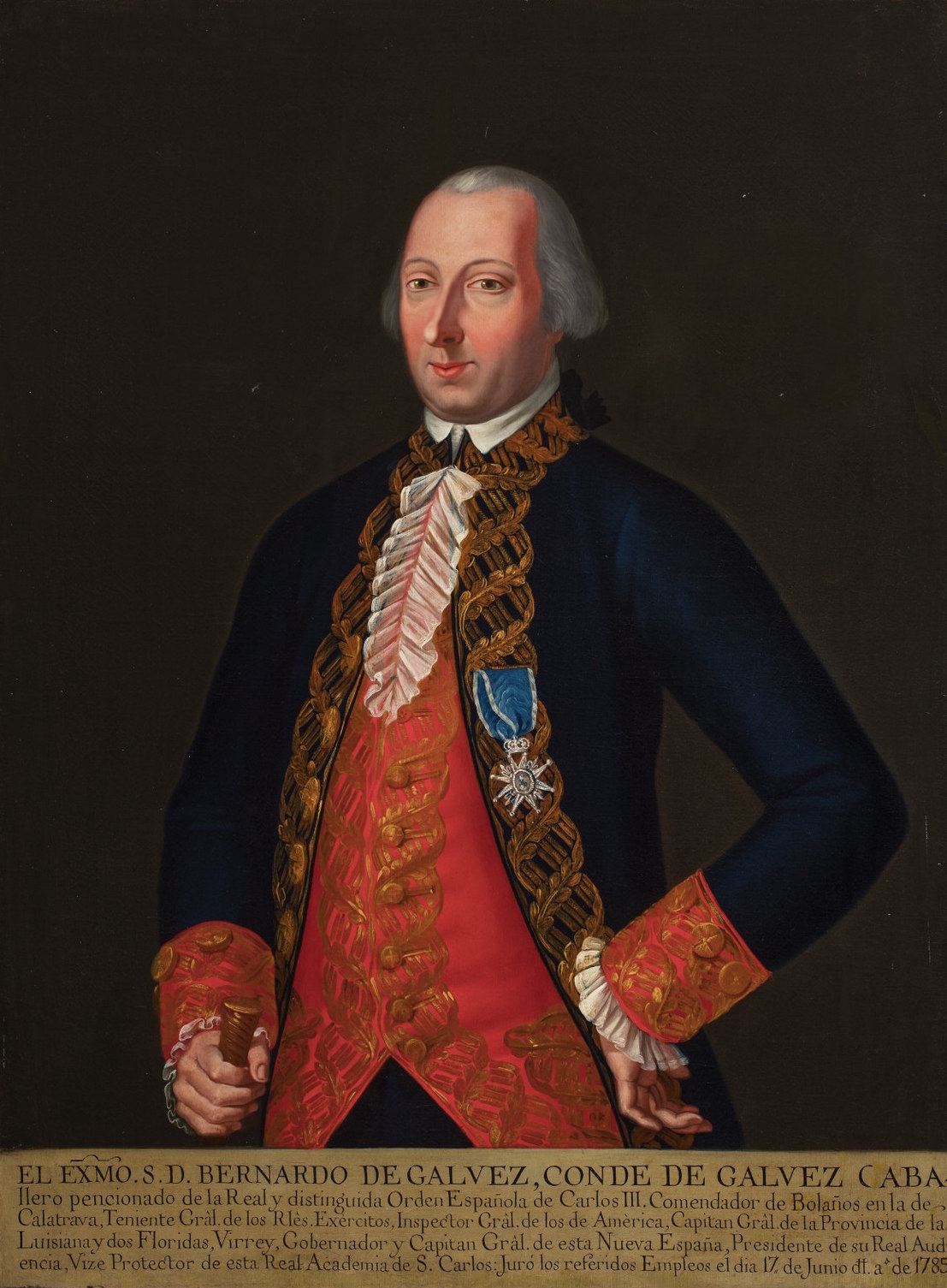
Galvez’s victories enabled Spain to win control over the entire lower Mississippi River basin by removing the British threat from the area.
To demonstrate their appreciation for his success, Spain promoted Galvez to Field Marshal.
- Thomas Jefferson’s Letter1779
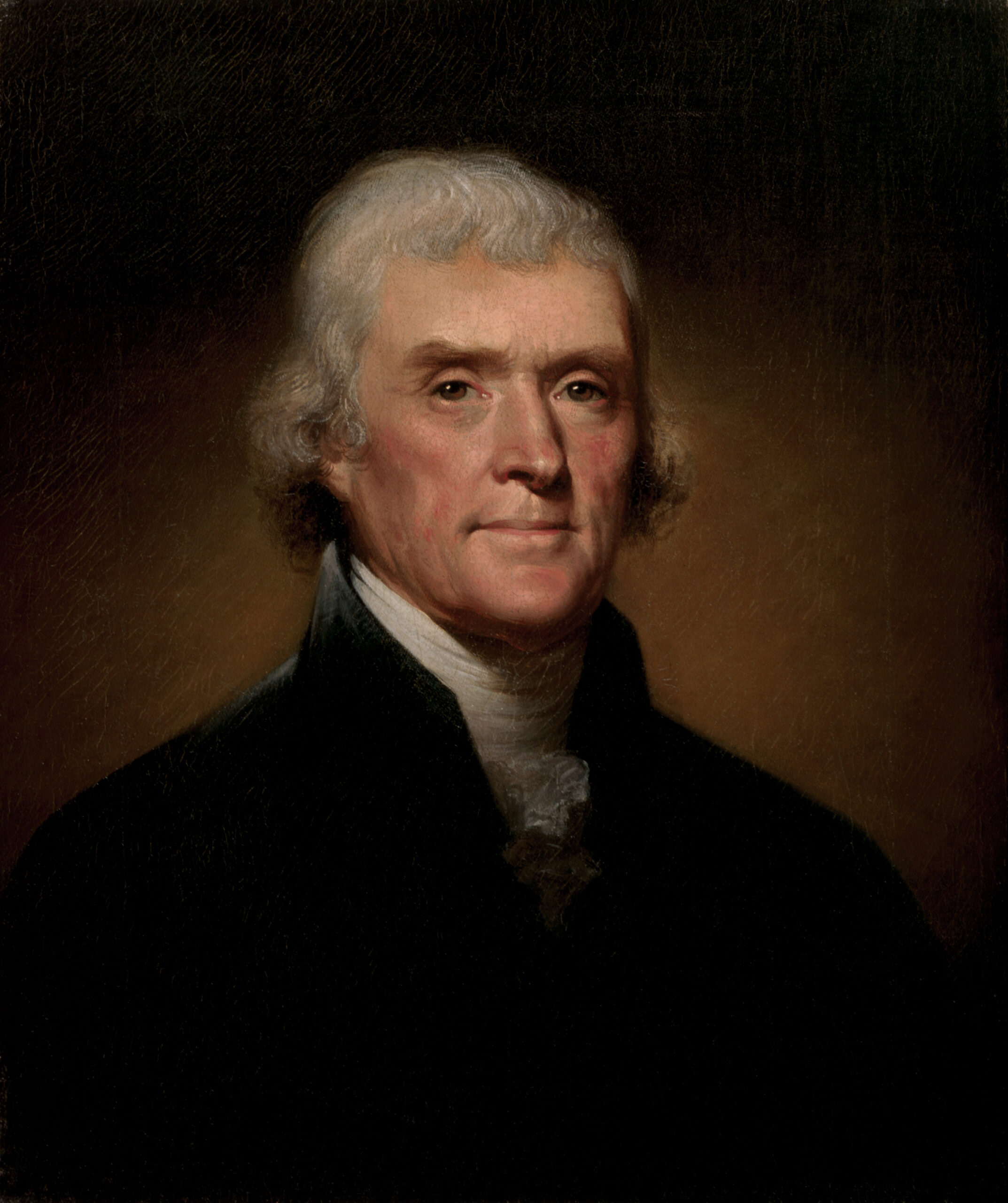
The Americans who received Spanish Louisiana’s help also expressed their gratitude to Galvez. In fact, Thomas Jefferson himself penned a “thank you” letter to the Spanish governor on November 8, 1779.
 1780Gulf Coast Campaign Begins
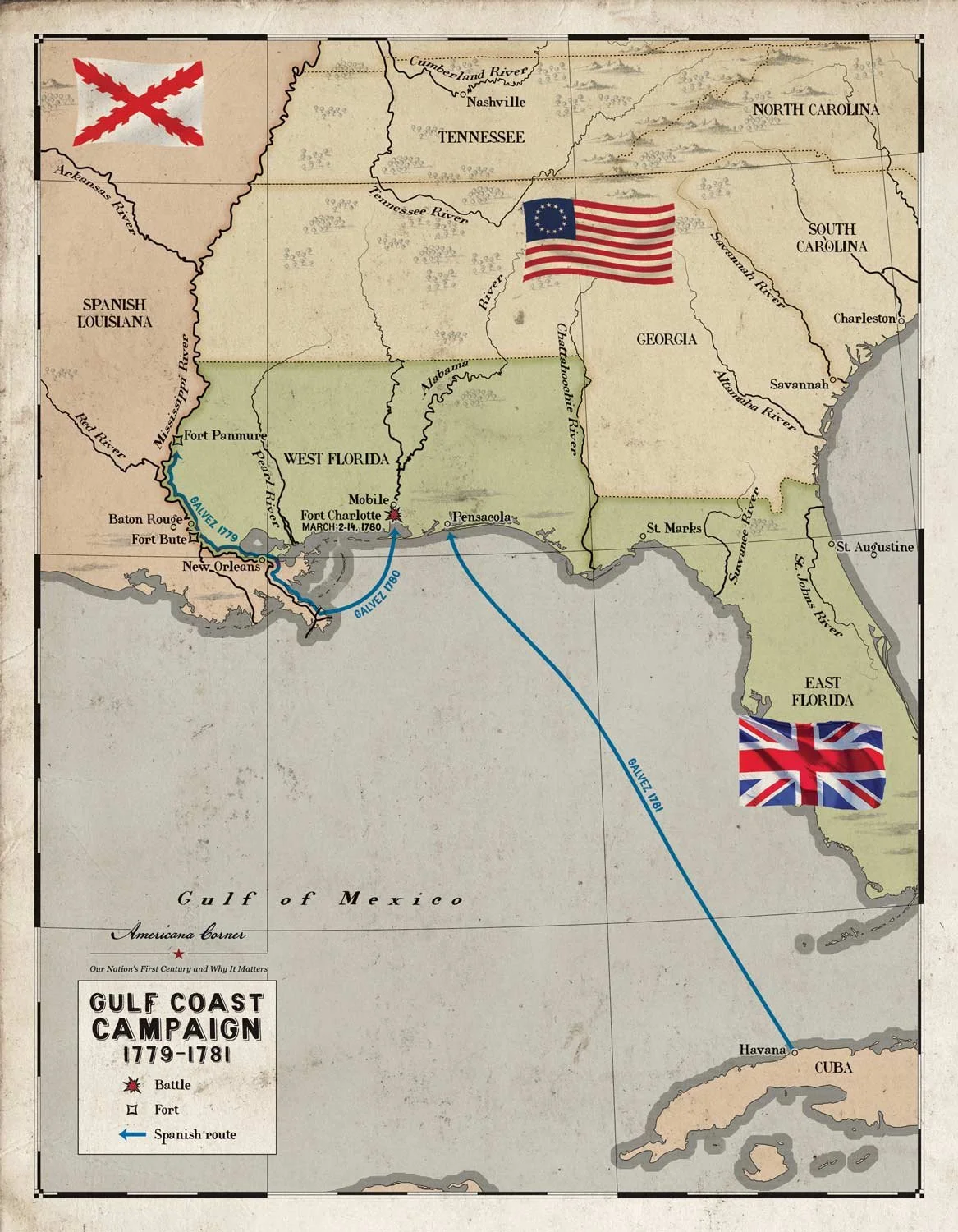
Knowing he could not pause to rest on his laurels, Galvez then turned his attention to the Gulf Coast.
From January 28-March 14, 1780, Galvez led the attack on Mobile with 107 free blacks hailing from New Orleans counted among his men. Once again, the weather nearly sabotaged his efforts.
- More Storms in the Gulf and Mobile, Alabama
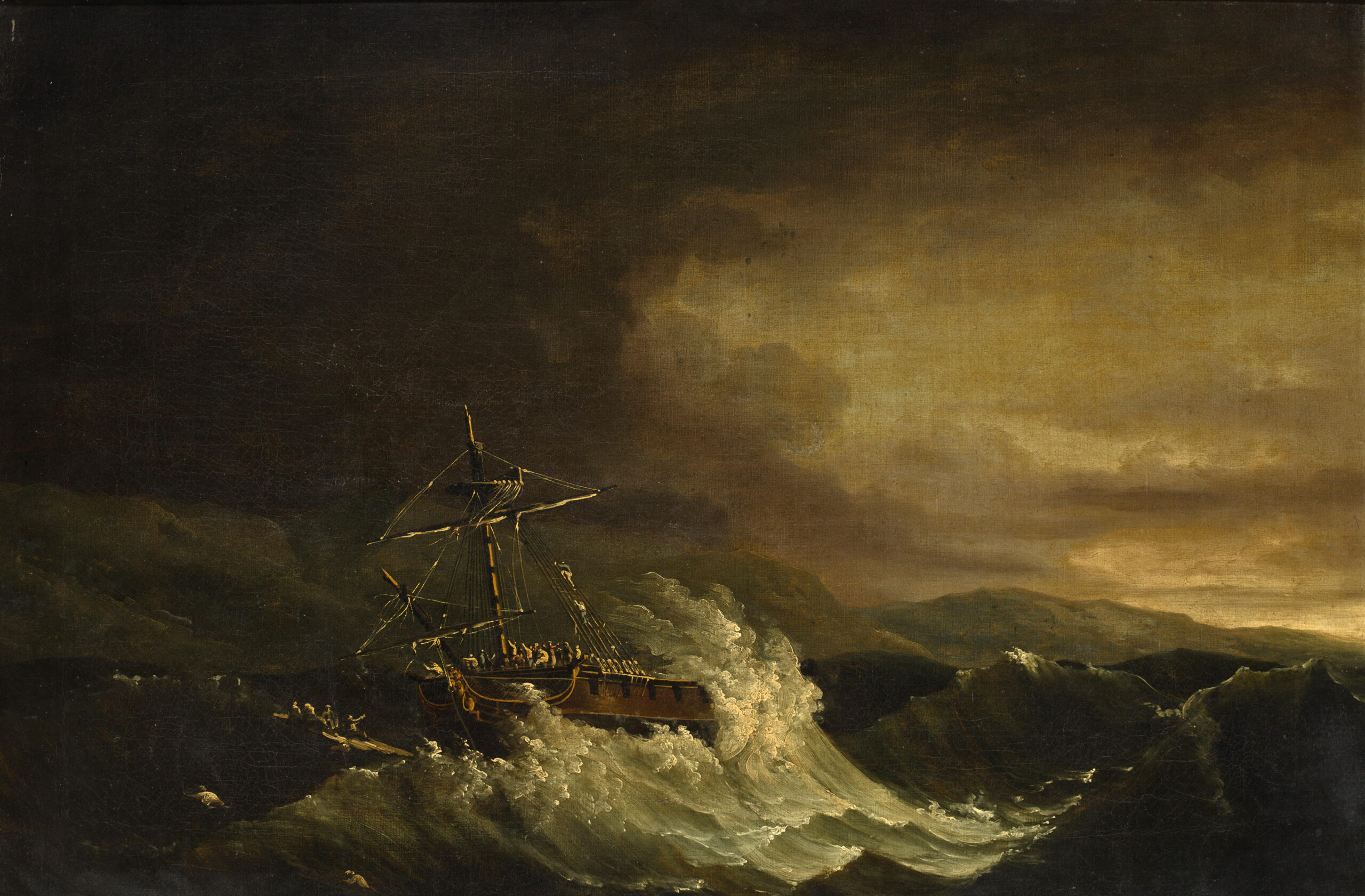
When another major storm hit in March, it ran aground Galvez’s New Orleans’ ships intended for Mobile.
Galvez succeeded in repairing the damaged vessels, then proceeded with the attack on Fort Charlotte, which allowed him to take Mobile in Alabama.
With Mobile behind him and Pensacola, Florida, being the last major British stronghold on the Gulf Coast, Galvez pushed on.
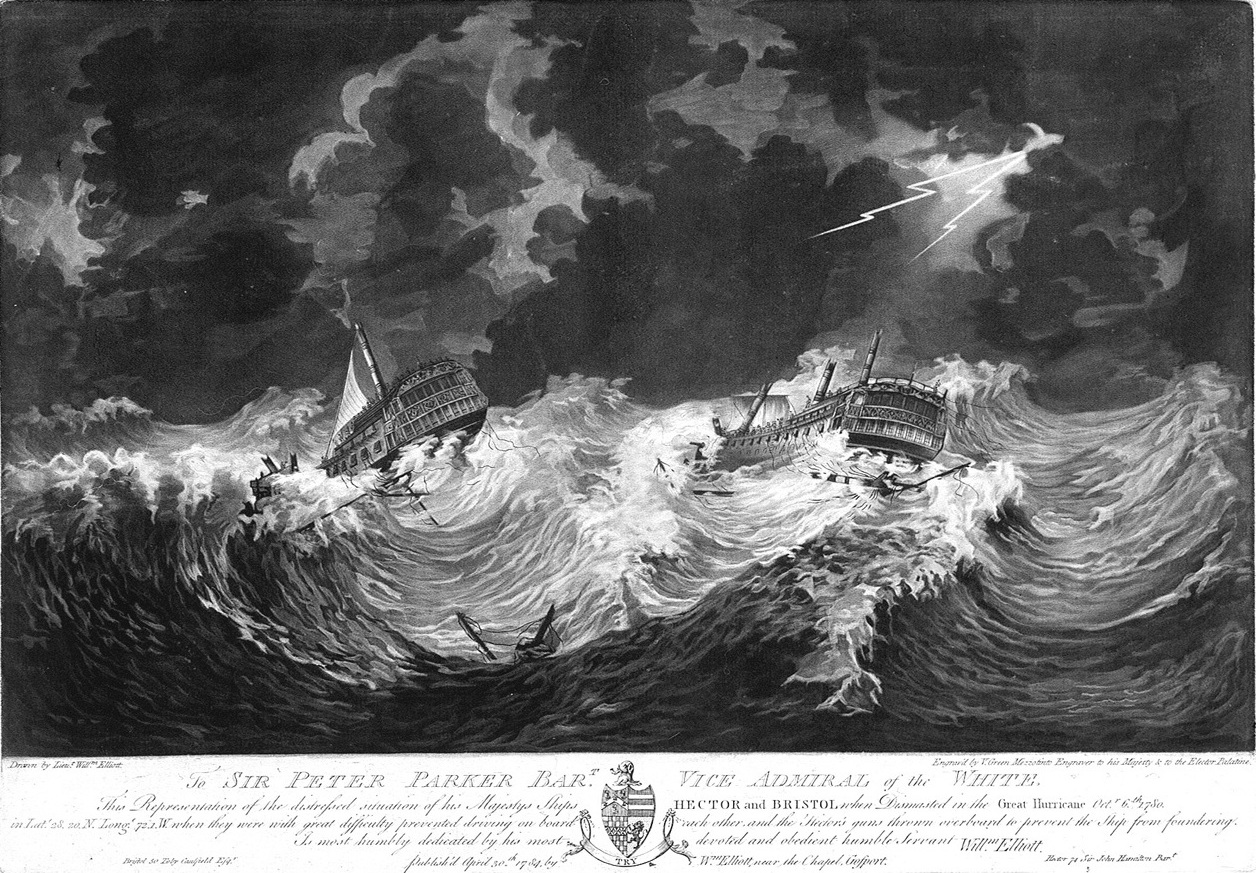 Worst Hurricane Season Ever
The three storms of 1780 that caused incredible death and devastation is still considered to be the worst hurricane season on record for the entire Gulf Coast.
The hurricane that hit in May caused Galvez’s first expedition to conquer Pensacola to fail.
In late August, a hurricane boasting wind gusts estimated to be between 160 and 180 miles per hour destroyed nearly every building on Grand Isle, damaged New Orleans, caused tornadoes, and killed more than two dozen people.
Yet, Galvez refused to quit. On October 16, 1780, Galvez once again pushed forward towards Pensacola, this time leading 15 warships and 59 transport ships northward from Havana, Cuba. He was struck by yet another devastating hurricane with winds reaching 200 miles per hour. Only half of the 4,000 men aboard the fleet survived.
- Overcoming the Storms
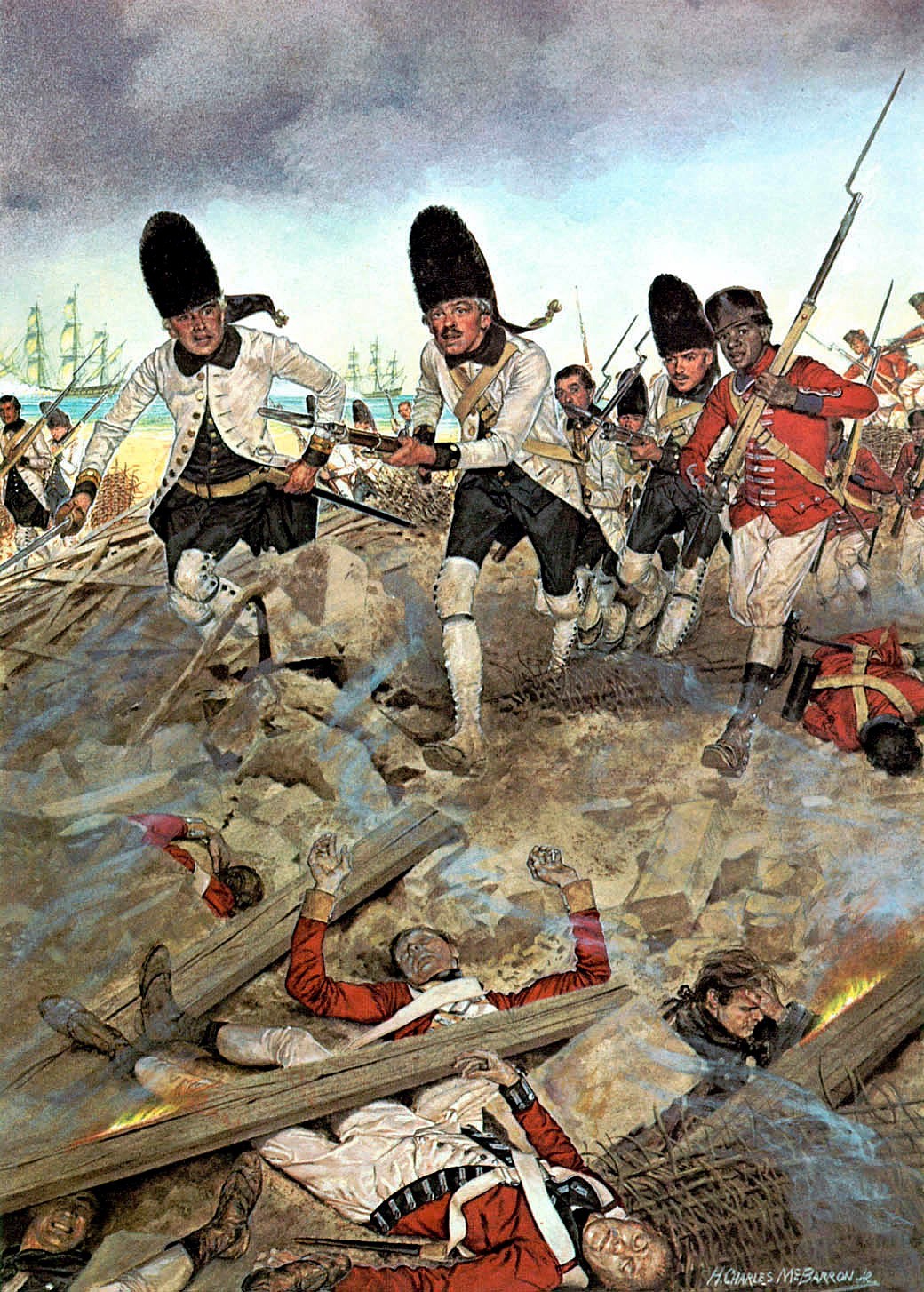
Although a concerned War Council advised Galvez against sailing towards Pensacola again, Galvez fired back, “Have we so little constancy that a single tropical storm suffices to halt us?”
In February 1781, Galvez finally succeeded in arriving at the mouth of Pensacola Bay with enough ground troops and a fleet of war ships to attempt taking Pensacola once again.
This time, it was not a hurricane that halted him, but rather the captain of the fleet who refused to have his ships cross the narrow channel for fear they would become easy targets for the British.
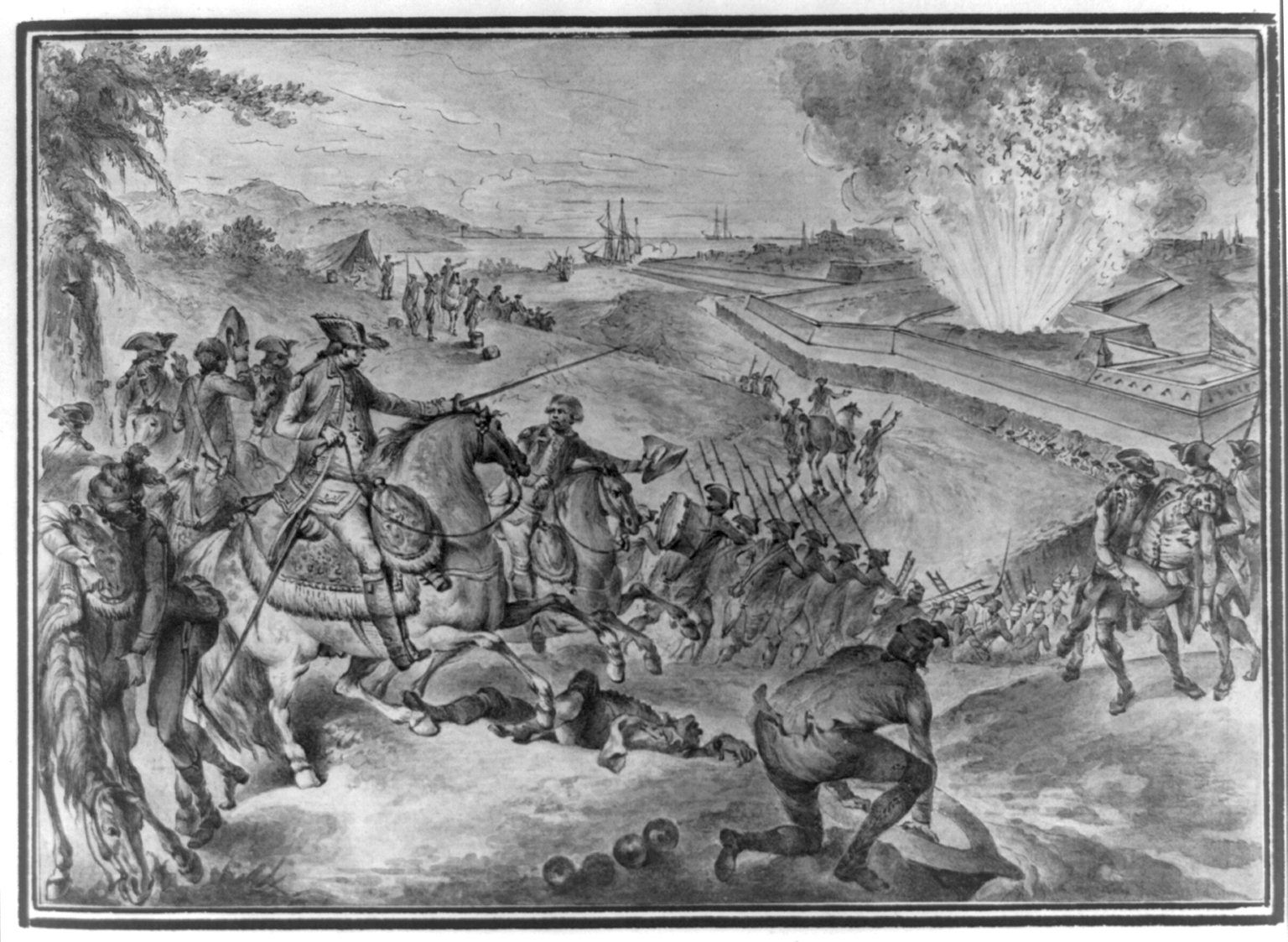 “Yo, Solo”
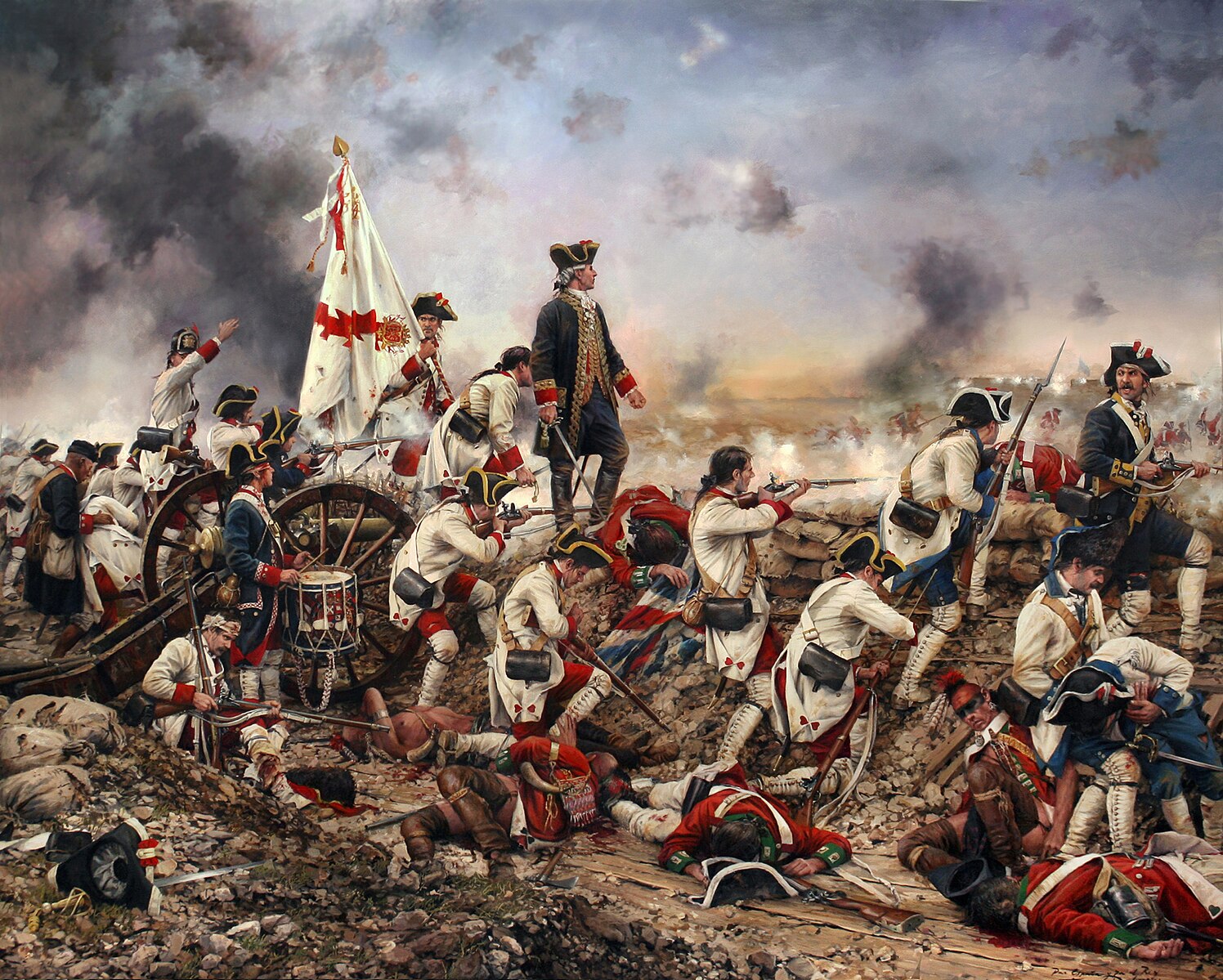
Galvez acted anyway, boarding the small brigantine Galvezton and successfully breeching the port, despite heavy British cannon fire.
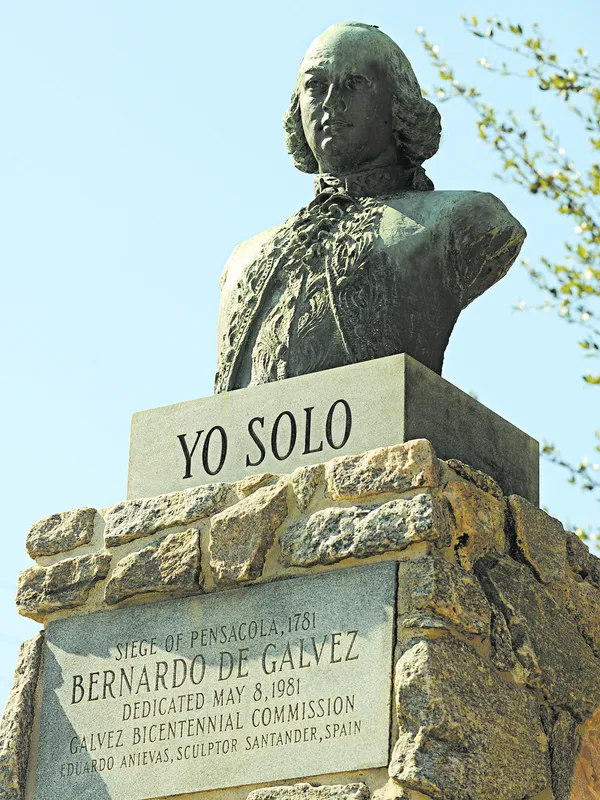
Spurred on by his heroic deed, the rest of the ships entered the bay. The phrase “Yo, solo,” [“I alone”] would later be inscribed on his coat of arms to mark this daring feat, even though he was not the only one aboard the Galvezton.
- A monument in honoring Galvez in Pensacola prominently bears the inscription “Yo Solo.”
 1781Siege of Pensacola
The two-month Spanish siege of Pensacola by land and sea lasted from March 9 to May 10, 1781, and became one of the longest battles of the entire War for Independence.
Roughly 8,000 troops representing various regions of Spain, Cuba, and Louisiana, including Louisiana militiamen and Louisiana dragoon detachments, as well as 143 free pardos and 128 free morenosx overran the British stronghold.
- Galvez’s Victories
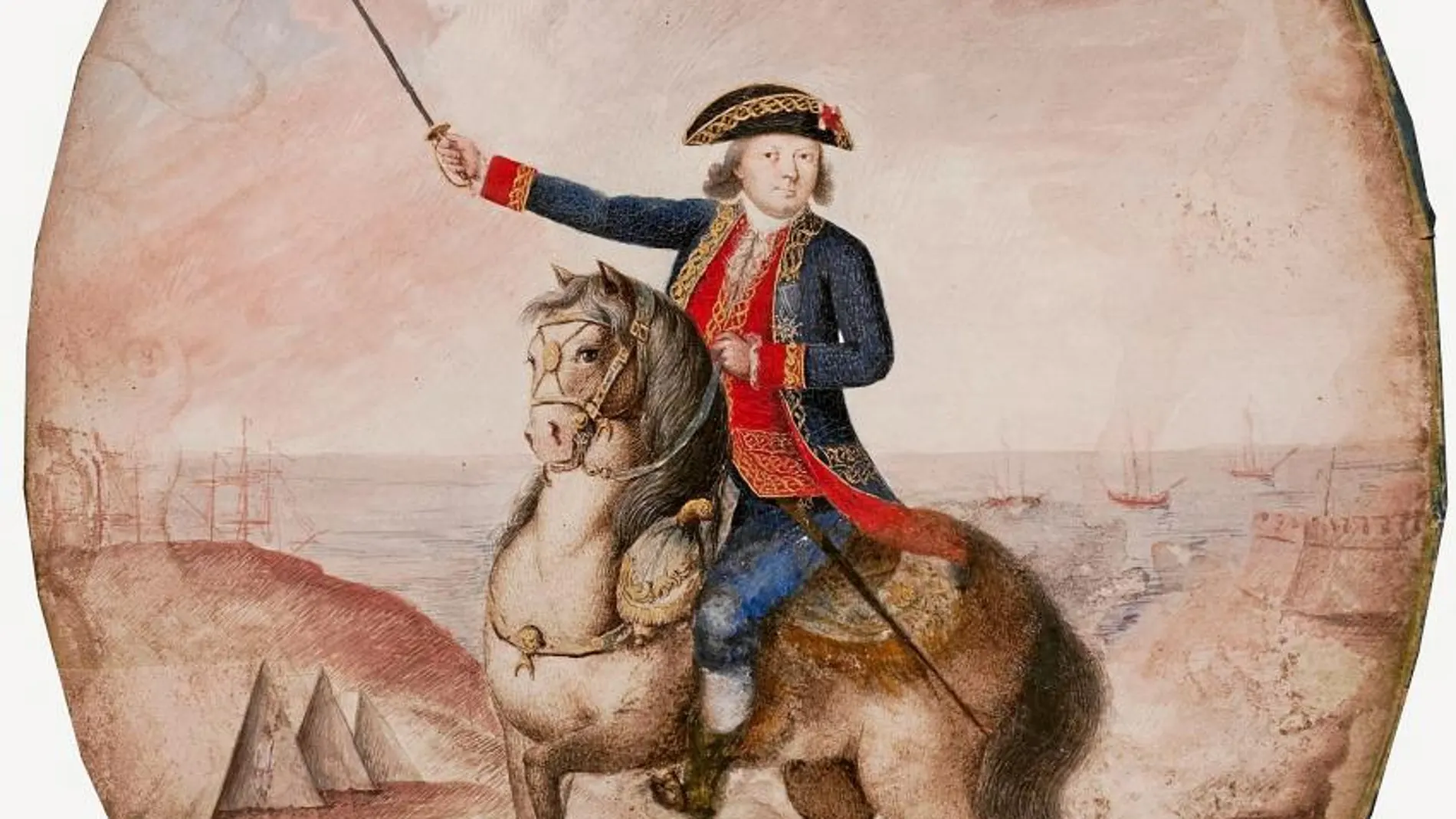
Galvez’s decisive victories up the Mississippi River and along the Gulf Coast gave Spain control of the South and enabled the American army to focus her attention to defeating the British in the North.
 1781Natchez
Although the British regained Natchez in May 1781, they quickly lost it again on June 28 to soldiers from the Louisiana Regiment and Militia.
- George Washington’s Toast to the Spanish and French1781
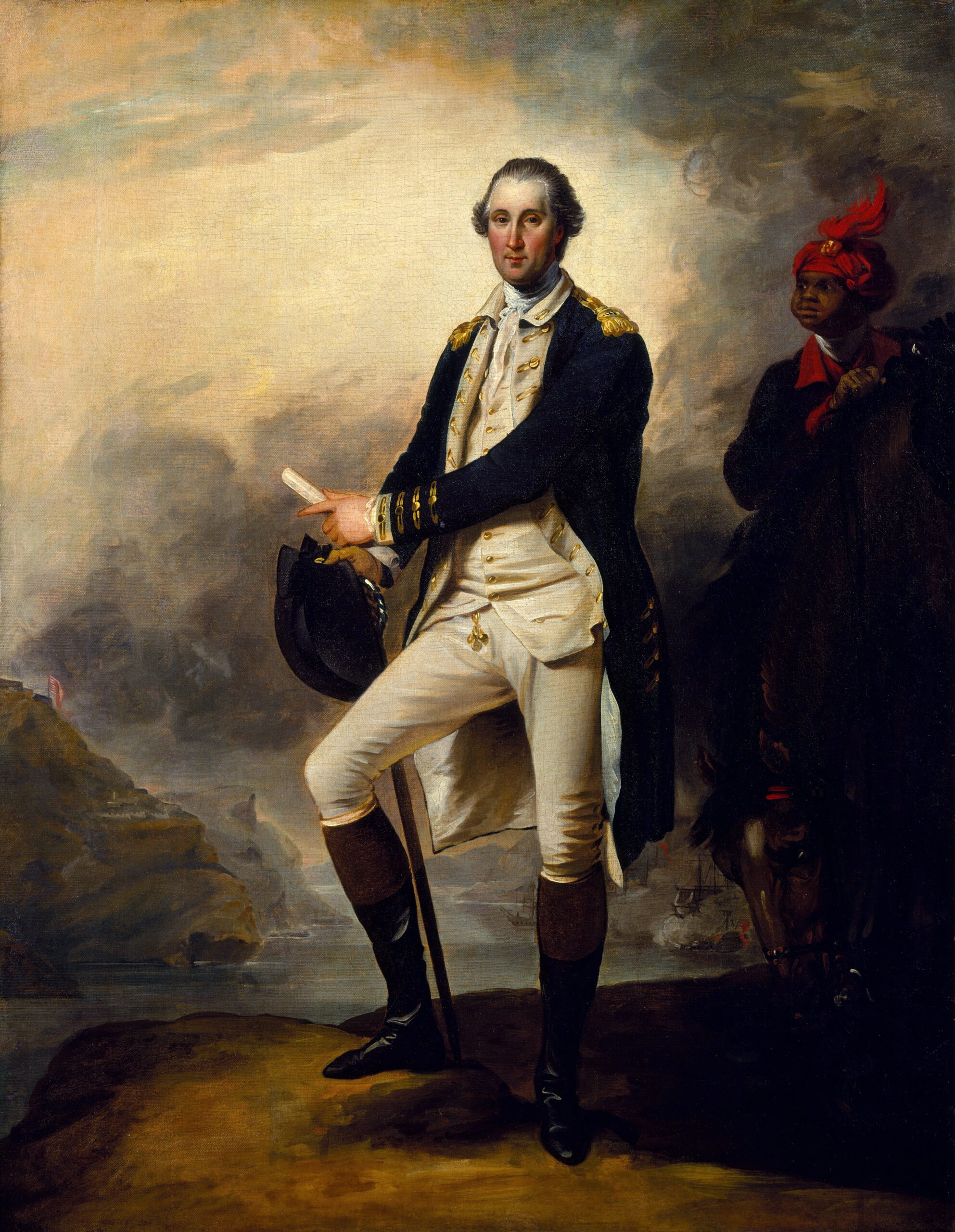
In August, George Washington and others drank a toast in Philadelphia, thanking the Spanish and the French for their tremendous support.
Louisiana, having been a colony of both European nations, and having played a major role in defeating the British themselves, no doubt shared Washington’s excitement and optimism for a favorable outcome.
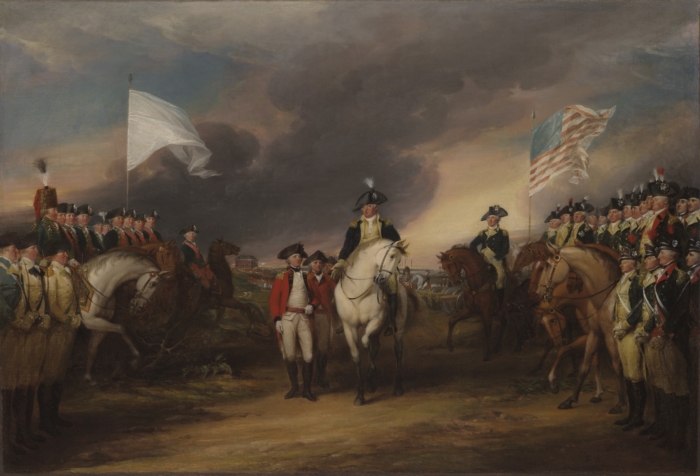 1781Yorktown, the Final Battle
With so much attention focused on defending Pensacola during the lengthy siege, the British did not have enough of a military presence to withstand the American offensive at Yorktown, the final battle of the War for Independence.
On October 19, 1781, British General Cornwallis surrendered to General George Washington and his French ally, the Marquis de Lafayette.
Although no Spanish troops participated in the battle, Spain’s Royal Commissioner sent one million pesos to the head of the French fleet to lend her support and demonstrate solidarity.
- Treaty of Paris1783
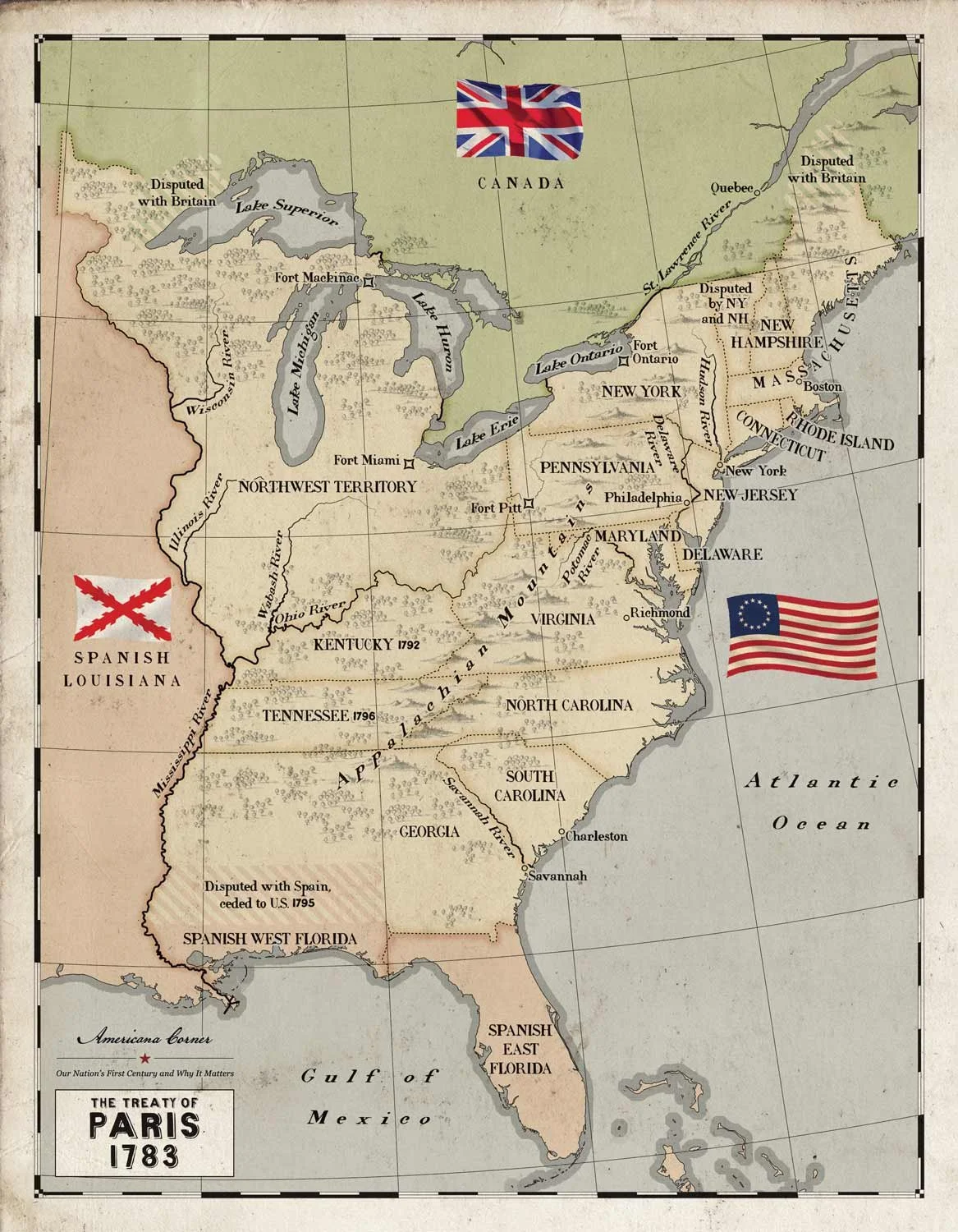
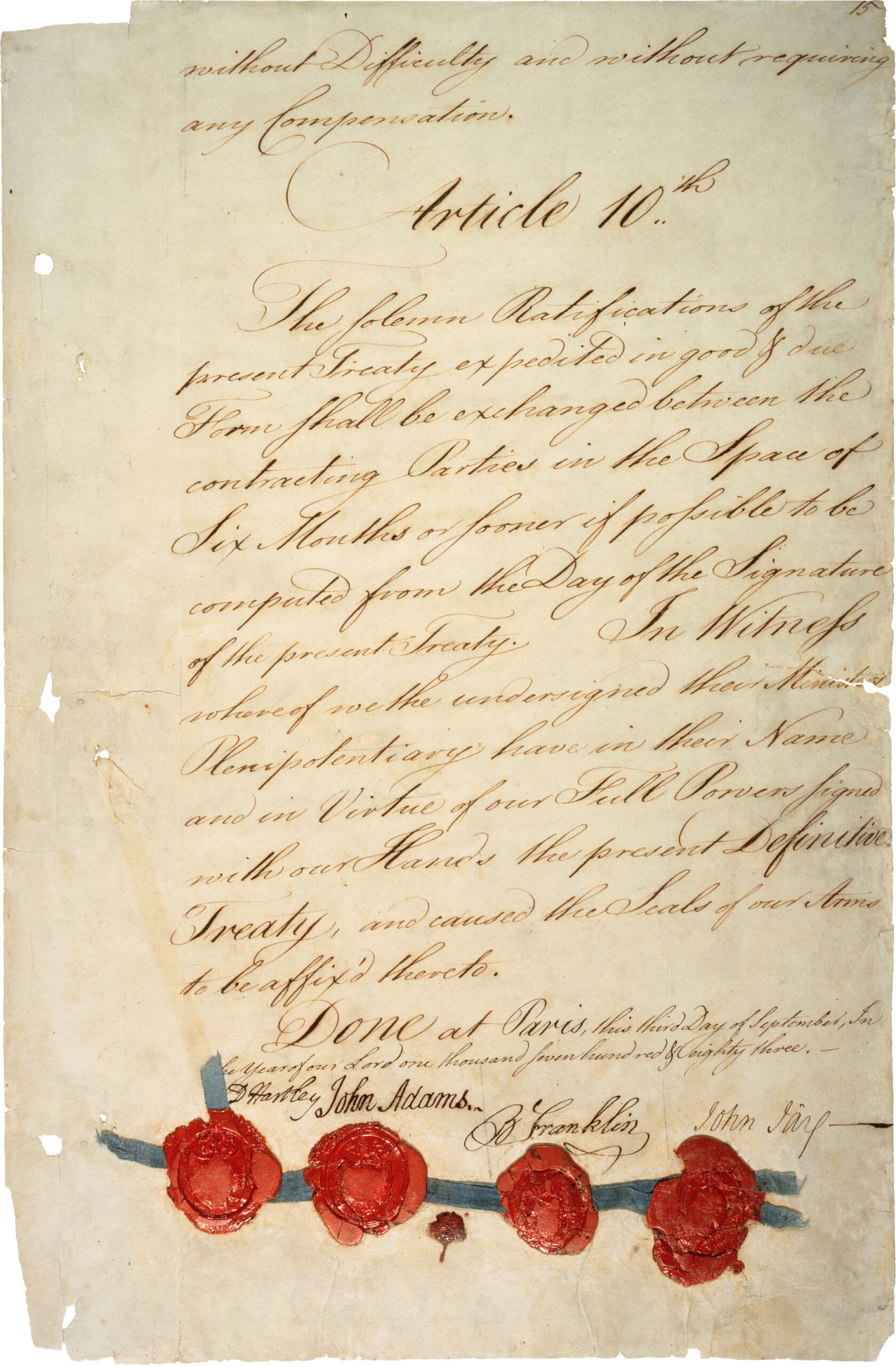
On September 3, 1783, the Treaty of Paris officially ended the American War for Independence.
During this series of treaties, Spain recognized the independence of the United States of America, but they did not sign anything regarding the navigation of the Mississippi River or the borders of territories taken by the English.
- Sore losers
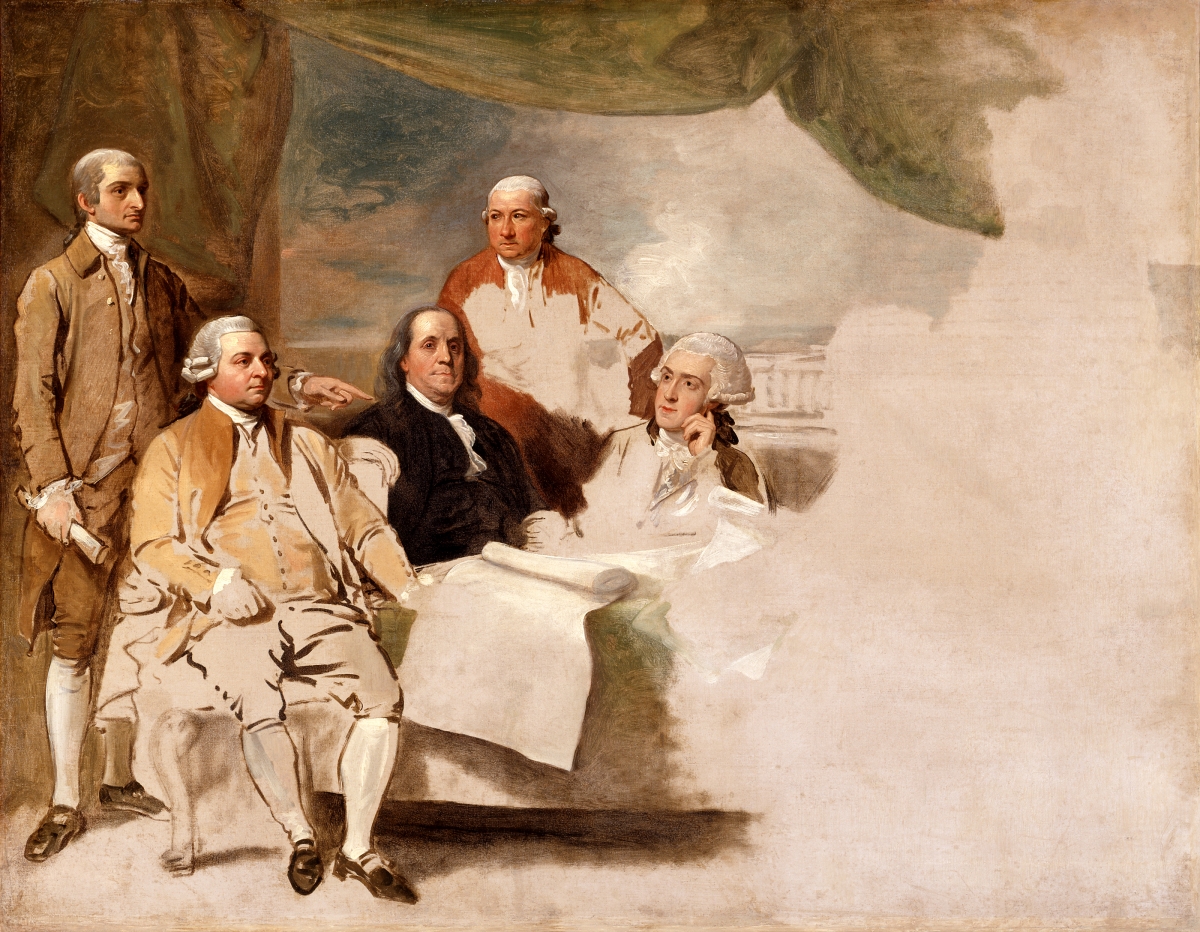
This work of art depicting the signing of the Treaty of Paris in 1783 was never completed.
The Americans portrayed are (left to right): John Jay, John Adams, Benjamin Franklin, Henry Laurens, and William Temple Franklin. The British commissioners refused to pose, so the painting was never finished.
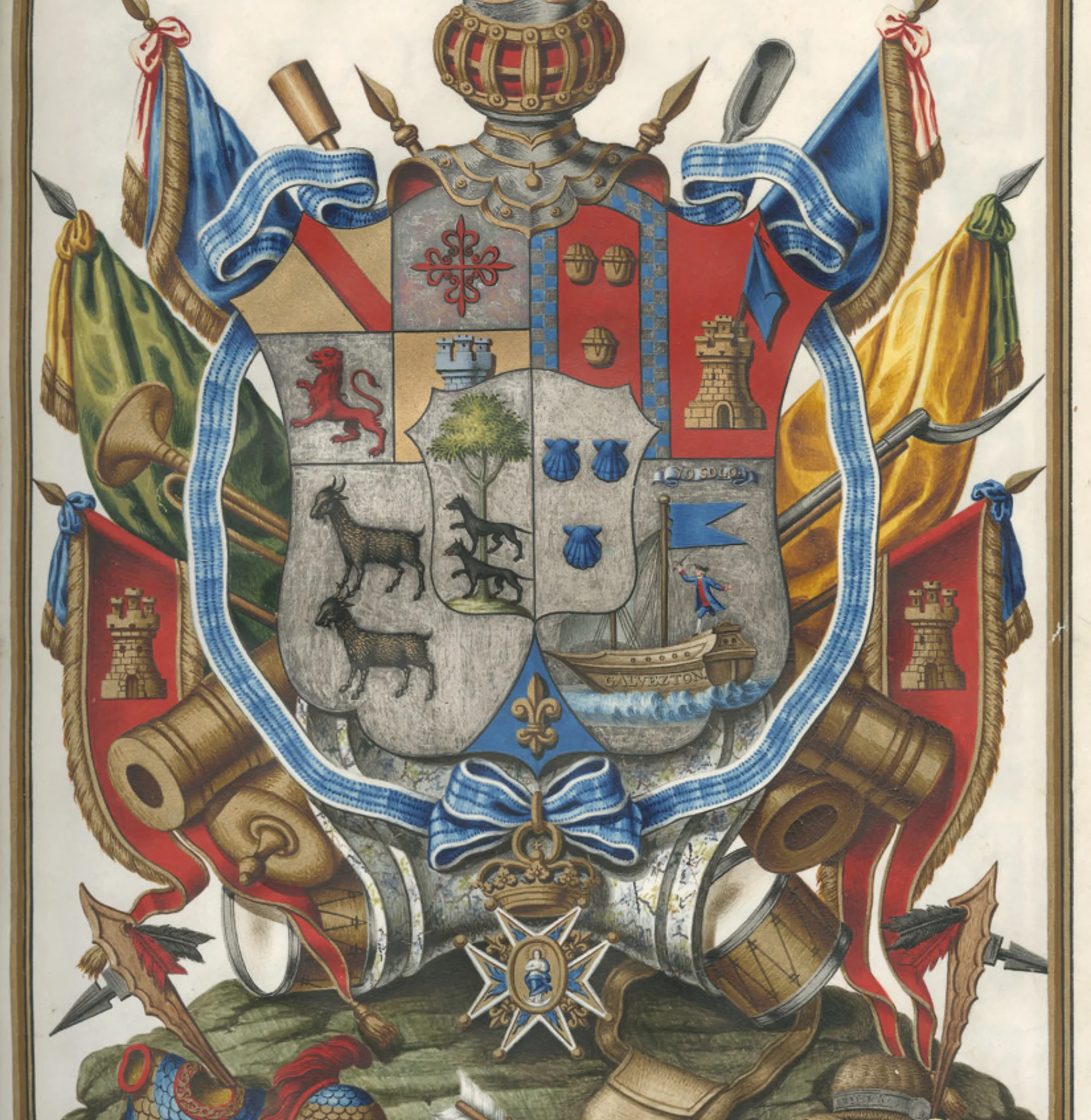 Galvez Becomes Nobility
After being away for eight years, Galvez returned to Spain as a conquering hero in April 1784.
King Carlos III promoted Galvez to nobility and made him a count and a viceroy of New Spain, placing him in command of all Spanish military operations in the Americas.
The king also incorporated the motto “Yo Solo” (I alone) into Galvez’s coat of arms in the banner above the emblem of the brigantine Galvezton to commemorate his courage under fire.
- U.S. Thanks Galvez1784
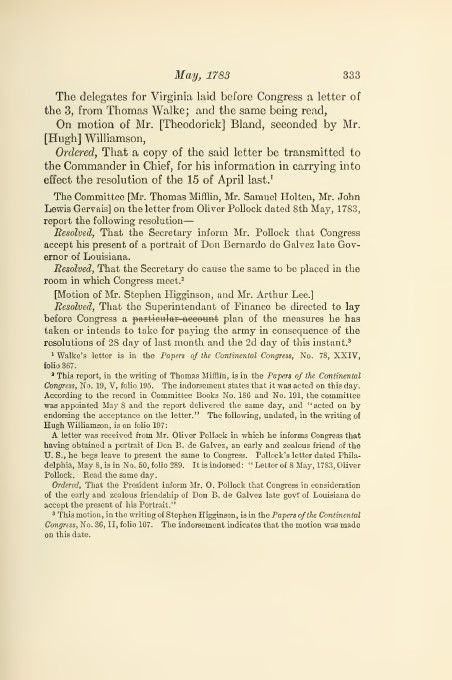
In 1784, the U.S. Congress formally recognized Galvez and Spain for their help, and stated that a portrait of Galvez should be placed in the Congressional Assembly room to honor him.
Unfortunately, the US did not keep her promise, and for many years, Galvez’s contributions were largely forgotten.
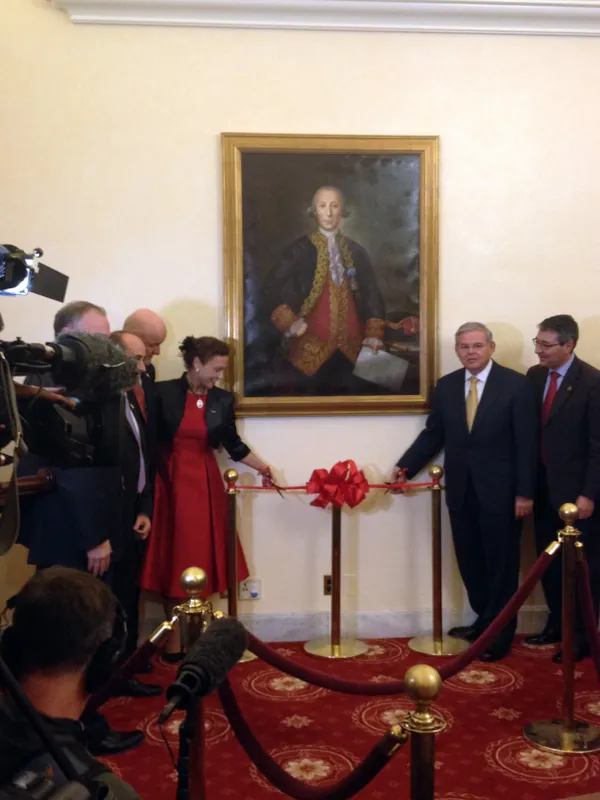 2014Galvez Awarded U.S. Citizenship
On December 16, 2014, Congress voted to grant Bernardo de Galvez honorary citizenship to the United States in recognition for his significant contributions to the foundation of America. Efforts began to have a portrait hung in Congress.
- Galvez’s Portrait

Today, Galvez’s portrait proudly hangs in the U.S. Capitol, a fitting tribute to the Spaniard who played such an important role in mobilizing Louisianans and other colonists of the Spanish empire to help the American cause for independence.
Portrait of Gálvez displayed at the United States Capitol, by Mariano Salvador Maella
 Galvez Remembered
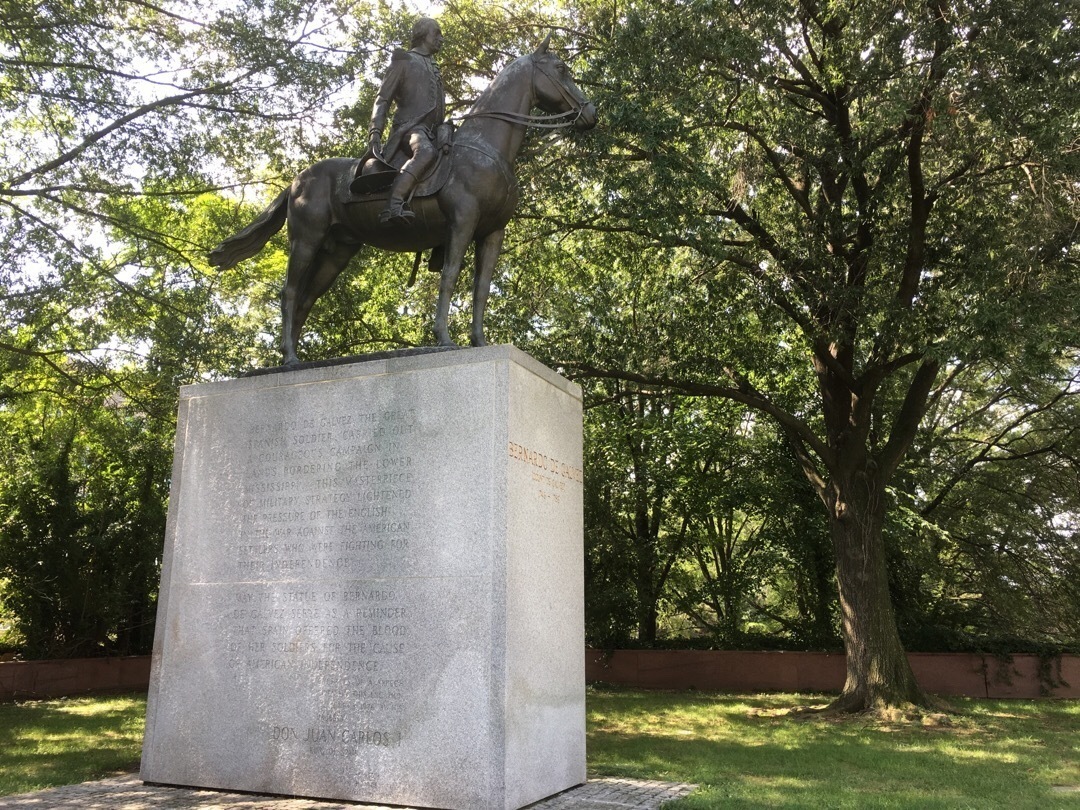
No longer forgotten, statues and plaques commemorating Galvez can be found in various places. For example, Galveston, Texas, bears his name, as does St. Bernard Parish in Louisiana.
As part of the United States’ Bicentennial Anniversary in 1976, a bronze equestrian memorial statue honoring Galvez was erected on the National Mall in Washington, D.C.
A similar statue stands in New Orleans’ Spanish Plaza, while Galvez Plaza next to Louisiana’s Old State Capitol in Baton Rouge boasts a large sculpture and a commemorative plaque in his honor.